Advertorial

Home Blog
I've Taught Wilderness Water Safety For 14 Years. Here’s Why I Stopped Carrying A Filter Straw And Tell My Students To Do The Same.
If you've built your whole water plan around a straw, there's an entire category of contaminant you aren't touching. And it isn't bacteria.


I've spent fourteen years teaching people how to find, treat, and carry water when the tap isn't an option. Backcountry courses, disaster-readiness workshops, prep groups, scout troops. I've watched a lot of people build a lot of water plans.
And I've watched almost all of them make the same mistake I made myself for the better part of a decade.
They buy a filter straw, drop it in the bag, and check the box.
I get why. It's cheap, it's light, it's the thing everybody recommends, and it does one job genuinely well. I carried one for years and I'm not going to pretend it's junk. It isn't.
But here's what nobody tells you when you buy it: a filter straw is built to solve one specific problem, and most people are counting on it to solve a completely different one.
THE PROBLEM A STRAW WAS BUILT FOR AND THE ONE IT WASN'T
A hollow-fiber filter straw is a mechanical sieve. It has pores, usually around 0.2 microns, and it physically blocks anything bigger than that hole. Bacteria. Protozoa. Cysts. Sediment.
That's real protection and it matters. If you're drinking from a creek downstream of a cattle pasture, a straw is doing something a bandana never will.
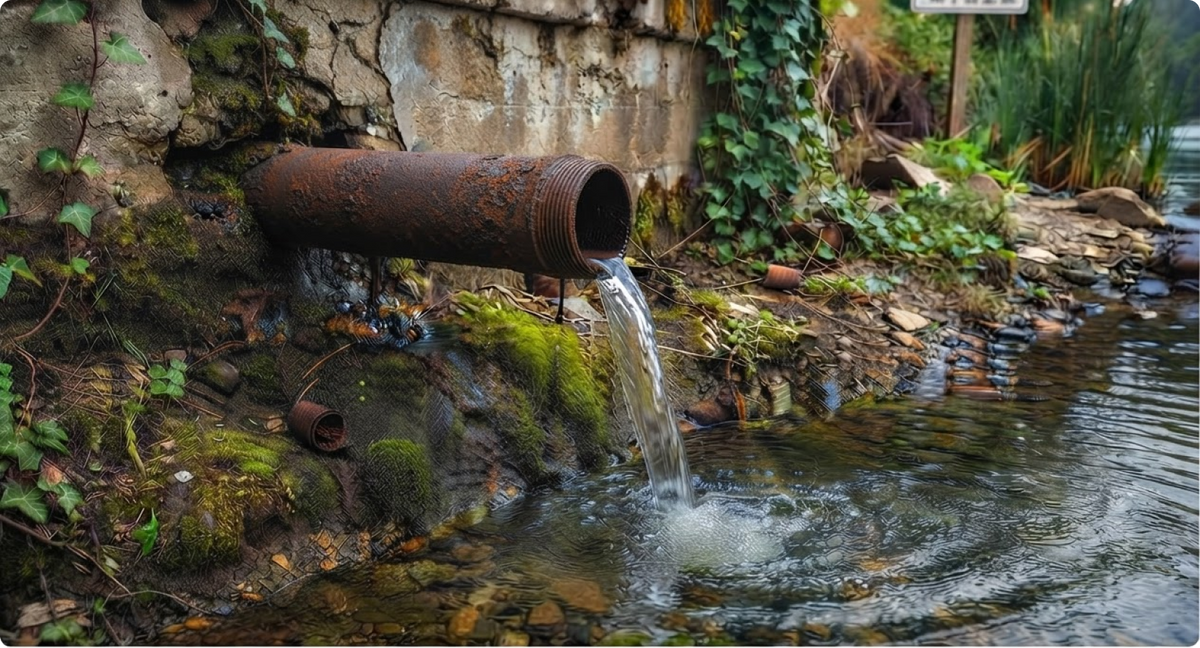
But dissolved metals don't work that way.
Lead and arsenic aren't particles. They're dissolved into the water at the molecular level thousands of times smaller than the pores in that straw. They go straight through, and you'd never know. No taste. No smell. No cloudiness. Nothing.
And here's the part that reframed the whole thing for me: the backcountry isn't exempt.
Heavy metals aren't a plumbing problem that stops at the trailhead. They're in outdoor water for reasons that have nothing to do with pipes at all.
Water is a solvent. It moves through rock, and rock gives things up. Arsenic-bearing minerals weather out of bedrock and into the groundwater feeding wells and seeps. Volcanic geology loads whole regions with it and geothermal springs, the kind that look like the cleanest water you've ever seen, can run well above the federal drinking water limit for arsenic.
Then there's what falls out of the sky. Decades of industrial emissions and leaded fuel settled lead into soil and surface water across the country, and it didn't leave.
There are a lot more of them than most people realize, scattered through the mountains and drainages of the American West, quietly draining metal-laden water into creeks that look completely untouched.
That's the whole problem. It looks clean. A stream coming out of a canyon can be gin-clear, cold, moving fast and carrying dissolved arsenic the entire way down.
And a straw walks right past it.
THE OTHER FOUR THINGS I GOT TIRED OF
The metals gap was the big one. But once I started paying attention, the everyday problems piled up fast.
You have to go to the water. A straw isn't a vessel. You drink at the source, face down, or you carry dirty water in something else and hope that something else doesn't leak. You can't fill up, treat it, and walk away with clean water in your hand.
The suction gets worse and you can't tell why. Every straw I've owned got harder to draw through over time as the fibers loaded up. Backflushing helps until it doesn't. Somewhere in there it stops filtering the way it did on day one, and there's no indicator to tell you when.
You can't actually clean it. You can flush it. That's not the same thing. You cannot get inside a straw and scrub it, which means you're carrying a warm, wet, dark tube around in your pack and trusting it.
Freeze one time and it's finished. If water is inside those hollow fibers when they freeze, the ice ruptures them. The straw looks completely normal afterward. It just doesn't filter anymore. For anybody storing gear in a garage, a truck, or a cold cache, that's a silent failure sitting in your bag right now.
For a weekend camper, those are annoyances. For someone whose entire philosophy is gear that works when it counts, that's four failure points you don't discover until the worst possible moment.
WHAT I CARRY NOW: A BOTTLE THAT DOES BOTH JOBS
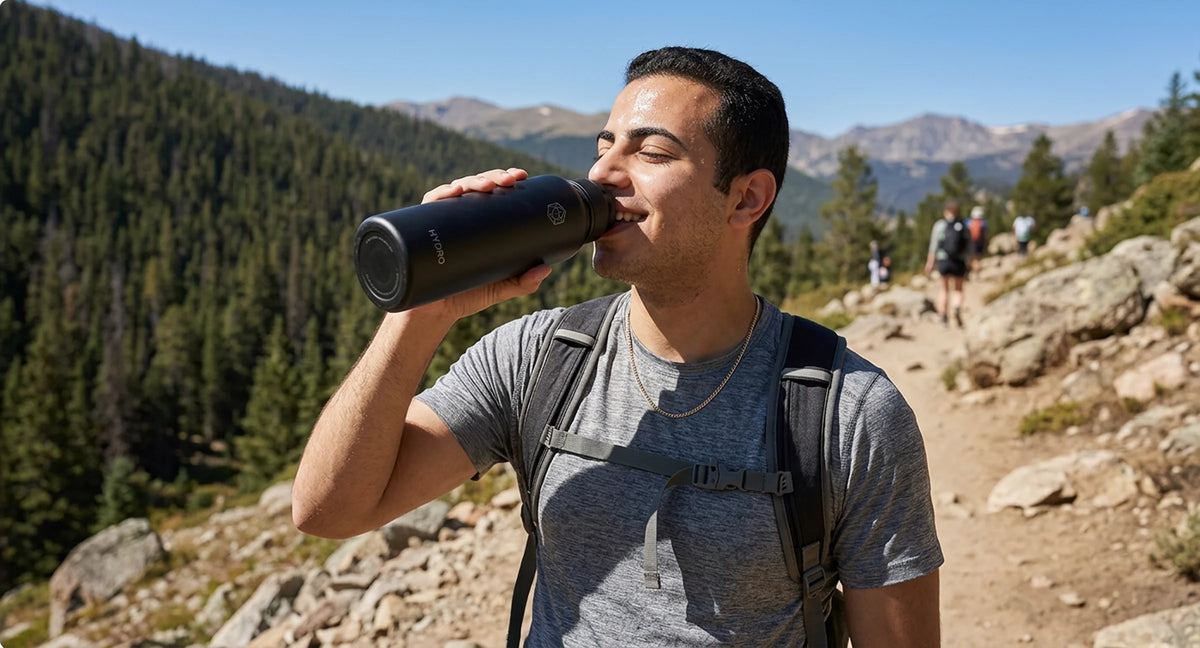
The shift I made, and the one I now push every student toward, is simple. Stop thinking of filtration as a straw you drink through, and start thinking of it as a bottle you carry.
A properly built filter bottle does three things a straw structurally cannot.
It treats and stores. Fill it, filter it, cap it, walk. You leave the water source with clean water instead of being tethered to it.
It can go after dissolved contaminants. A multi-stage cartridge has room for media that a pencil-width straw doesn't, activated carbon, ion-exchange media, the things that actually grab dissolved metals instead of straining particles.
It can be opened and cleaned. A wide mouth means you can get a brush and your hand inside it. That matters more than people think. The number one complaint I hear about filter bottles isn't filtration. It's the black gunk people find in the mouthpiece three weeks in.
But this is where I have to be straight with you. Most filter bottles on the shelf are worse than the straw you'd be replacing.
If you take one thing from this article, take this. It'll save you money on every water product you buy for the rest of your life.
"Filtered" is a marketing word. It means nothing on its own. The overwhelming majority of filter bottles are doing exactly one thing: running your water past a little carbon puck that softens the chlorine so it tastes better. That's it. Better-tasting water, zero additional protection.
On chlorine, there's a certification that actually means something. NSF/ANSI 42 is the standard for chlorine, taste, and odor reduction. It's independently verified and you can look the listing up yourself. A bottle that carries it has proven it reduces chlorine. A bottle that doesn't is asking you to take its word.
On lead and arsenic, here's the only question worth asking: will they show you the test?
That's it. That's the whole filter. Anybody can print "removes heavy metals" on a box. It costs nothing and it means nothing. What costs something is sending the product to an independent laboratory, running actual contaminated water through it, measuring what comes out the other side, and then publishing the number whether you like it or not.
So when a company tells you their filter handles lead, ask them three things:
Which laboratory ran it? A real name you can look up, not "third-party tested."
What the measured reduction was. An actual percentage, not "up to" and not "helps reduce."
Whether you can read the report. Not a summary. The report.
A hat that has done the work will hand you all three without hesitating, because the testing is the most expensive thing they did and they want you to know about it. A company that hasn't will change the subject to how many stages the filter has.
THE ONE IN MY PACK: THE ORCA PURE FLOW

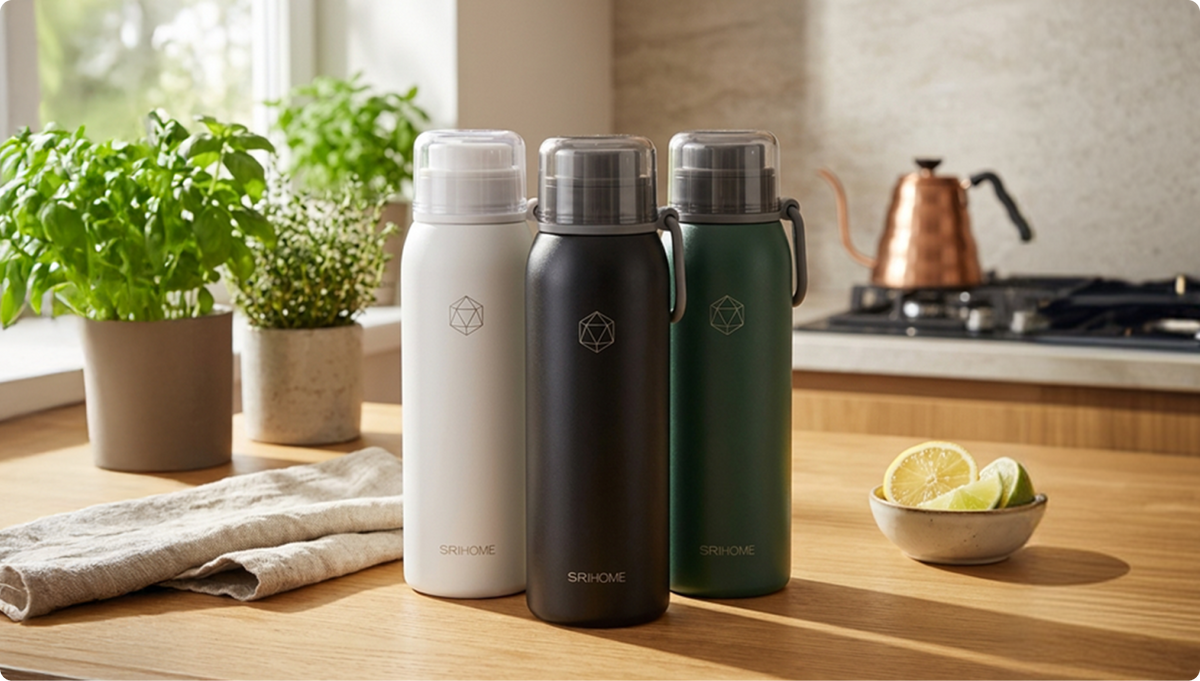
I've run a lot of bottles through my courses. The Orca Pure Flow is the one that ended up in my own kit, and the one I'm comfortable putting in front of a class because it answers both questions instead of dodging one of them.
On chlorine, it's certified. NSF/ANSI 42 certified for chlorine reduction. Not "designed to." Not "helps reduce." Certified against the standard.
On lead and arsenic, it's independently lab tested and the results are published. That's the part that sold me. Not the marketing. The fact that there's a document with a laboratory's name on it and a number in it that I can go read by myself, right now, before I spend a dollar.
Pros
Cons
BEST FOR
Campers, backcountry hikers, hunters, overlanders, survivalists, and preppers who want one bottle that handles both the pathogens a straw catches and the dissolved metals it doesn't. People who are done carrying a filter they can't clean, can't inspect, and can't tell has failed until they're already drinking from it.
If your water plan has to work on day one and on day ninety, in a creek and in a stranger's tap, this is the one I'd hand you.
THEN IT CAME HOME WITH ME
Here's the part I didn't expect.
I bought this thing for the field. It never made it back to the gear closet.
Because the thing about lead is that it isn't an emergency contaminant. It's a Tuesday contaminant. It comes out of service lines and household plumbing and fixtures in houses all over this country, every single day, and it's been doing it for decades. Nobody's on the news about it because it doesn't make anybody sick this afternoon. It just accumulates.
I've got a kid who fills a bottle at the kitchen sink every morning before school. Same water, same tap, five days a week, nine months a year.
Once you've read the testing on what actually comes out of the aging pipe, you don't really go back to not thinking about it.
So it sits on the counter now. My wife takes it to work. My daughter takes it to practice. It goes in the truck for road trips and gets refilled at gas stations and rest stops without anybody having to wonder what town's water they just drank.
The same three things that make it right for a bug-out bag make it right for a school backpack. It doesn't leak in a bag. It comes apart so it doesn't grow anything. And it's actually doing something to the water instead of just improving the taste.
That's the whole reason I stopped thinking of it as prepper gear.

(Ships Same Day)
THE BOTTOM LINE
A filter straw isn't a bad product. It's a specific product, built for a specific threat, and somewhere along the way the whole preparedness world started treating it like a complete water plan.
It isn't. It catches what it can strain and passes everything it can't. And the things it can't strain — lead, arsenic, the dissolved stuff — are exactly what's most likely to be in the water you actually end up drinking when the situation is bad.
Carry something that treats the water and carries it. Make sure the chlorine claim is certified and the metals claim comes with a laboratory report you can actually read. And get one you can take apart and clean, because the filter you can't inspect is a filter you're trusting blind.
Fourteen years in, that's about the clearest advice I've got.
I'D LOVE TO HEAR FROM YOU
Got a water setup that's held up for you, in the field or at home? I want to hear about it. I'm always testing gear that has to work when it counts, and reader feedback genuinely shapes what I put through its paces next. Drop me a line.